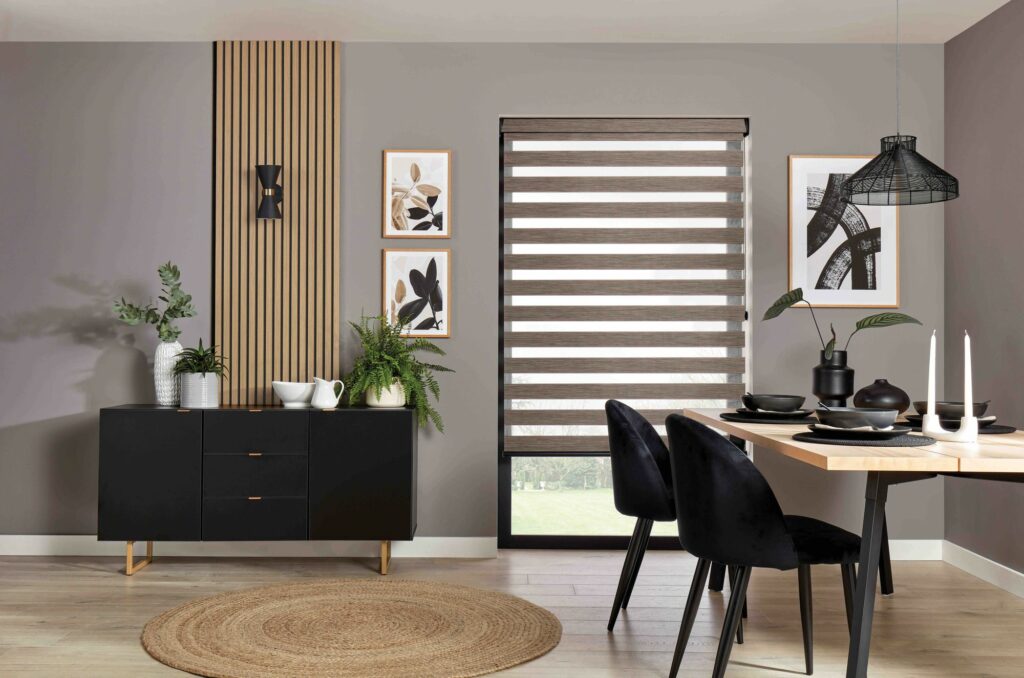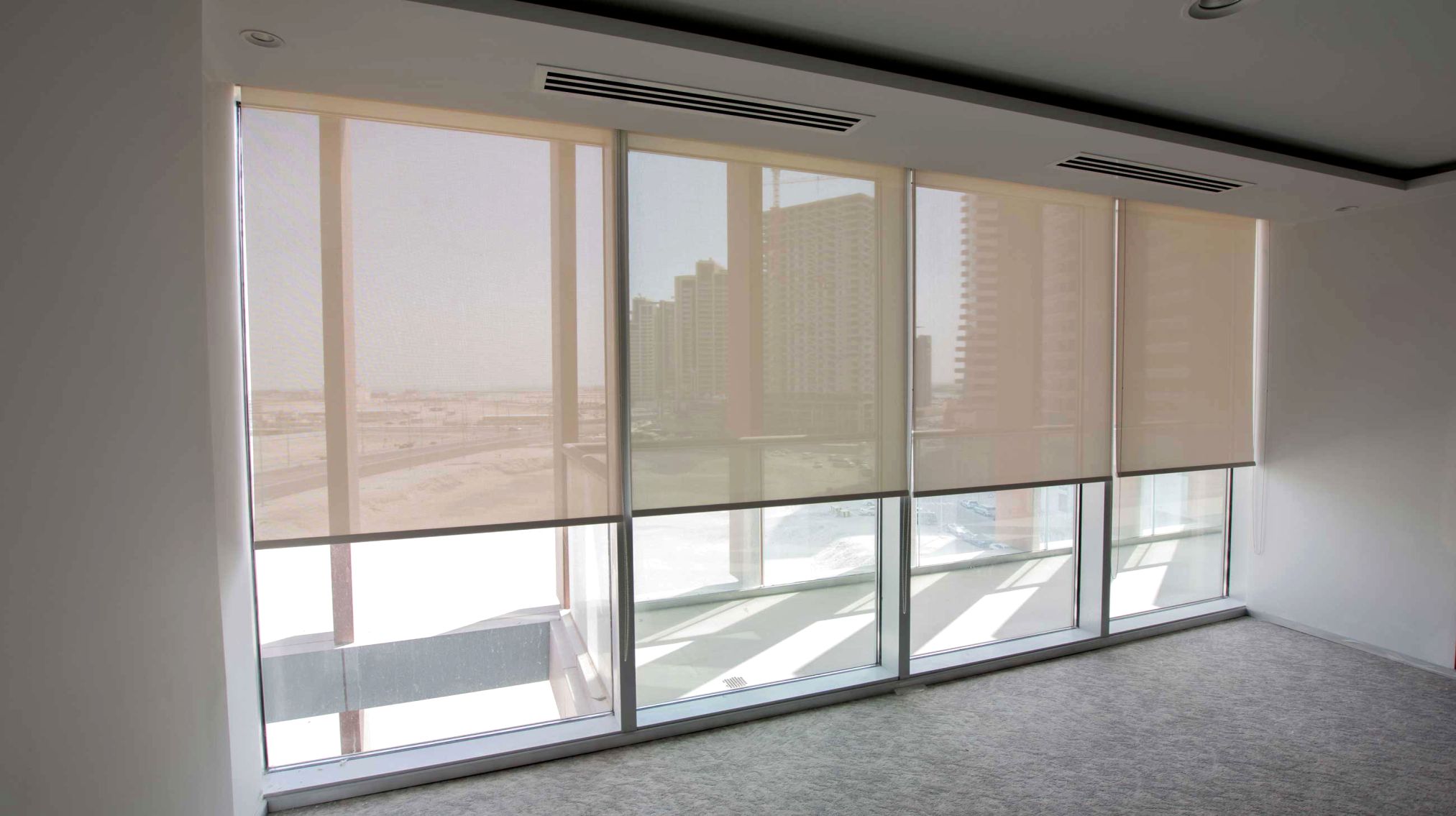
Roller blinds are the simplest way to manage glare and privacy without adding visual clutter. A single flat panel of fabric rolls up out of sight or down to the sill, which is why they suit almost any window, from a bedroom to a full wall of office glazing.
This guide covers how they work, the two decisions that matter most (fabric and fit), and the Infinity manual roller system we feature.
How a roller blind works

The fabric is fixed to a tube that sits between two brackets at the top of the window. Pull the control and the tube turns, winding the fabric up or letting it unroll under the weight of a hem bar along the bottom edge.
Because the blind is one flat panel, it gathers into a very small roll when raised and leaves the window almost completely clear. Set side by side, several blinds give a long run of glazing one consistent line, which is a large part of their appeal in apartments and workplaces.
Choosing the fabric
Fabric decides how the room feels more than anything else about a roller blind. Lighter weaves filter daylight and soften glare while keeping the room bright; denser fabrics block more of the light and give more privacy.
If a darker room is the goal, it helps to know what blackout fabric can and can’t do. It stops light passing through the material itself, but some light can still find its way around the edges of the blind. How and where the blind is fitted matters as much as the fabric, so the two are best considered together.
Inside the recess or outside it?
Both work. A blind fitted inside the window recess gives a neat, built-in look. Fixing above and beyond the recess covers more of the frame and can reduce light at the edges. If the window has deep reveals or the frame is part of the look, inside usually reads best; if privacy or a darker room comes first, outside is often the better choice.
The Infinity manual roller system
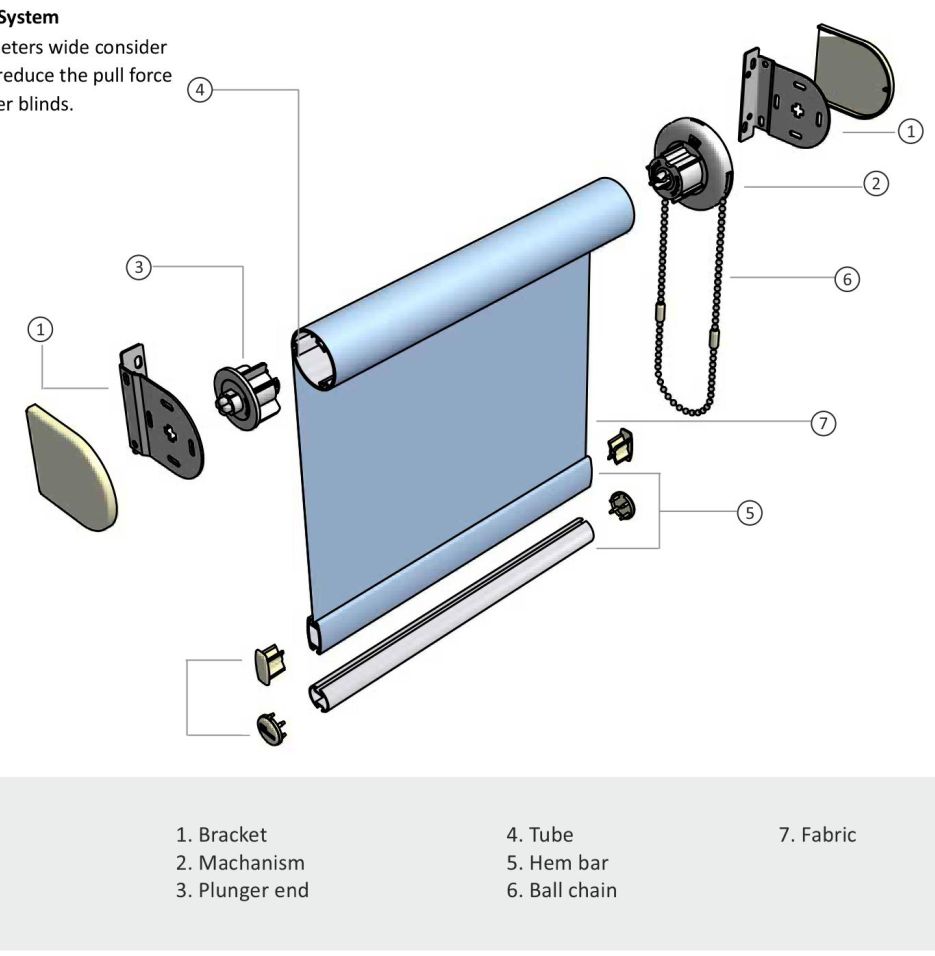
Our featured roller system is the Infinity manual roller blind. According to its technical data sheet, it is designed to fit most types of window and is particularly suited to standard-size windows. Its main features:
- Ball chain operation: the blind is raised and lowered with a continuous ball chain.
- Optional assisting spring: reduces the effort needed, which helps with larger blinds and for anyone who prefers a lighter pull.
- Securing pin in the brackets: helps keep the blind in place if the chain is pulled with excessive force.
- Minimal light gap: a quick-fit bracket design that keeps the gap between blind and recess small.
- Tested components: parts and structures tested for reliability and strength over a period of more than one year.
How big can an Infinity roller blind be?
It depends on the weight of the fabric. The data sheet gives a maximum recommended drop of 6.00 m for fabrics up to 200 g/m² at widths from 0.5 m to 2.5 m, and 4.75 m for fabrics of 200–320 g/m². For the heaviest group (320–485 g/m²) the maximum drop is 6.00 m up to 1.5 m wide, then 5.00 m at 2.0 m and 4.00 m at 2.5 m. These are maximum recommendations; we confirm what suits each window.
The full table, edge clearances and bracket dimensions are on the Roller Blinds page, along with the data sheet to download.
Where roller blinds work well

- Living rooms and bedrooms
- Home offices and studies
- Offices, meeting rooms and reception areas, where a row of blinds keeps a façade orderly while managing glare on screens
- Apartments with floor-to-ceiling glazing
Thinking about roller blinds?
Tell us which rooms you’re planning, rough window sizes and how much light you’d like to keep, and we’ll talk you through fabrics and fitting. Send an enquiry about roller blinds